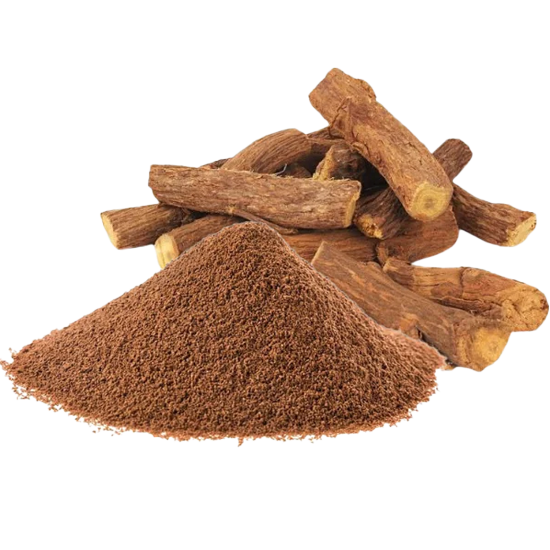
What is Qust Al-Hindi? Qust Al-Hindi (القسط الهندي) is a type of herbal root that comes from the plant genus Saussurea costus. It grows in the following regions: 📍 North India 📍 Kashmir 📍 Himalayas
The roots of this plant have been dried and used for thousands of years in various traditional medical systems. Qust Al-Hindi has a strong aroma and is rich in various natural compounds that make it valuable in traditional medical practices.
Origin & History of Qust Al-Hindi Qust Al-Hindi has been used for over 2,000 years. In the history of world trade, it is among the valuable herbs brought via: 🌿 Silk Road 🌿 Arab Trade Route 🌿 India-Mesopotamia Trade Route
This herb was used by: 🏺 Ancient Indian Civilization (Ayurveda) 🏺 Arab Civilization 🏺 Persia 🏺 Greece
Because of its high value, Qust Al-Hindi was once considered one of the premium herbs of its time.
Qust Al-Hindi in Islamic Medicine Qust Al-Hindi has a special position because it is directly mentioned in the hadith of the Prophet Muhammad (SAW).
Hadith narrated by al-Bukhari The Prophet Muhammad (SAW) said: “You should use Al-Qust Al-Hindi because in it there are seven types of healing.” (Hadith narrated by al-Bukhari)
This makes Qust Al-Hindi one of the most famous herbs in Islamic medicine.
What is the Meaning of “Seven Cures”? Islamic scholars and medical scholars explain that the hadith shows that Qust Al-Hindi has various health benefits.
However, the Prophet Muhammad (SAW) did not specifically detail the seven benefits.
Therefore, scholars assume that it refers to the various health benefits known to society at that time
Islamic Scholars’ Views Islamic medical figures such as: 📚 Ibn Sina (Avicenna) | 📚 Ibn al-Qayyim | 📚 Al-Zahrawi have discussed the use of Qust Al-Hindi in their works.
It is traditionally used to support: 🌿 Respiratory health 🌿 Digestive health 🌿 General health of the body 🌿 Body balance
Qust Al-Hindi According to Modern Medicine Modern studies have found that Qust Al-Hindi contains various bioactive compounds such as: ✅ Sesquiterpenes ✅ Costunolide ✅ Dehydrocostus Lactone ✅ Natural Antioxidants
This compound is being studied for its potential in supporting various aspects of health.
Benefits of Qust Al-Hindi
1. Supports Respiratory Health This is one of the most well-known traditional uses. Qust Al-Hindi is often used in traditional practices to support respiratory comfort.
2. Rich in Antioxidants Antioxidants help protect cells from damage caused by free radicals.
3. Supports the Immune System The natural compounds in Qust Al-Hindi help support the normal function of the body’s immune system.
4. Supports Digestive Health In traditional medicine, it is used to help maintain the comfort of the digestive system.
5. Helps Support a Healthy Inflammatory Response Modern studies show that several compounds in Qust Al-Hindi have properties related to supporting the body’s normal inflammatory response.
6. Supports Liver Health Antioxidants help protect body cells from oxidative stress, including liver cells.
Why is Qust Al-Hindi Special? ✔ Mentioned in the hadith of the Prophet Muhammad (SAW) ✔ Used for thousands of years ✔ Used in Islamic Medicine ✔ Used in Ayurveda ✔ Rich in bioactive compounds ✔ Still being studied by modern researchers
The combination of historical values, Islamic traditions and modern studies makes Qust Al-Hindi one of the most interesting herbs to practice as part of a healthy lifestyle.
Conclusion Qust Al-Hindi is a historic herb that has been used for thousands of years in Indian, Arab and Islamic civilizations. It holds a special place in Islamic medicine because it was directly mentioned by the Prophet Muhammad (PBUH) as an herb with various benefits.
Today, modern research continues to explore the potential of the natural compounds it contains, making Qust Al-Hindi a unique combination of Islamic medical heritage and modern science.
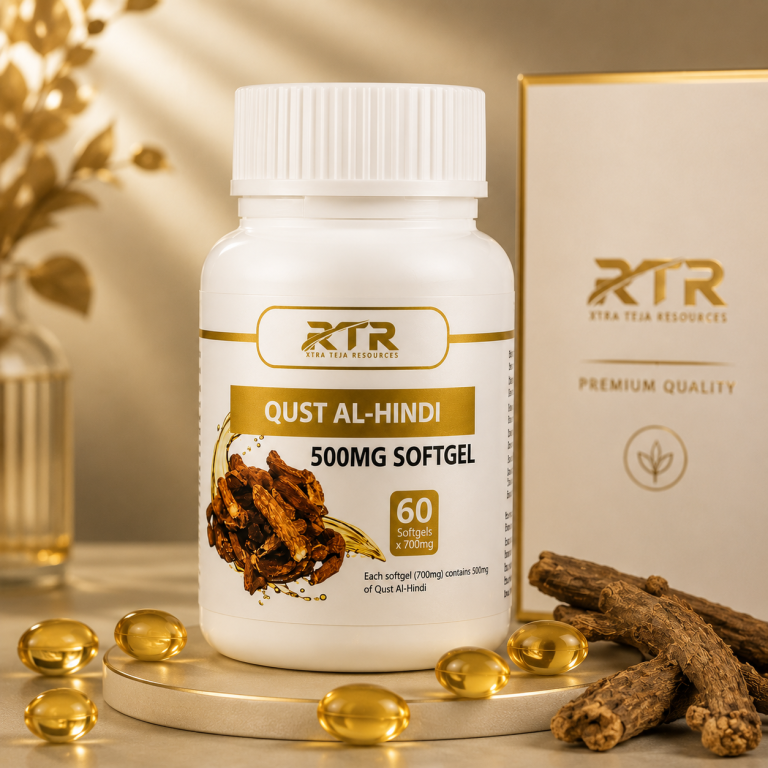
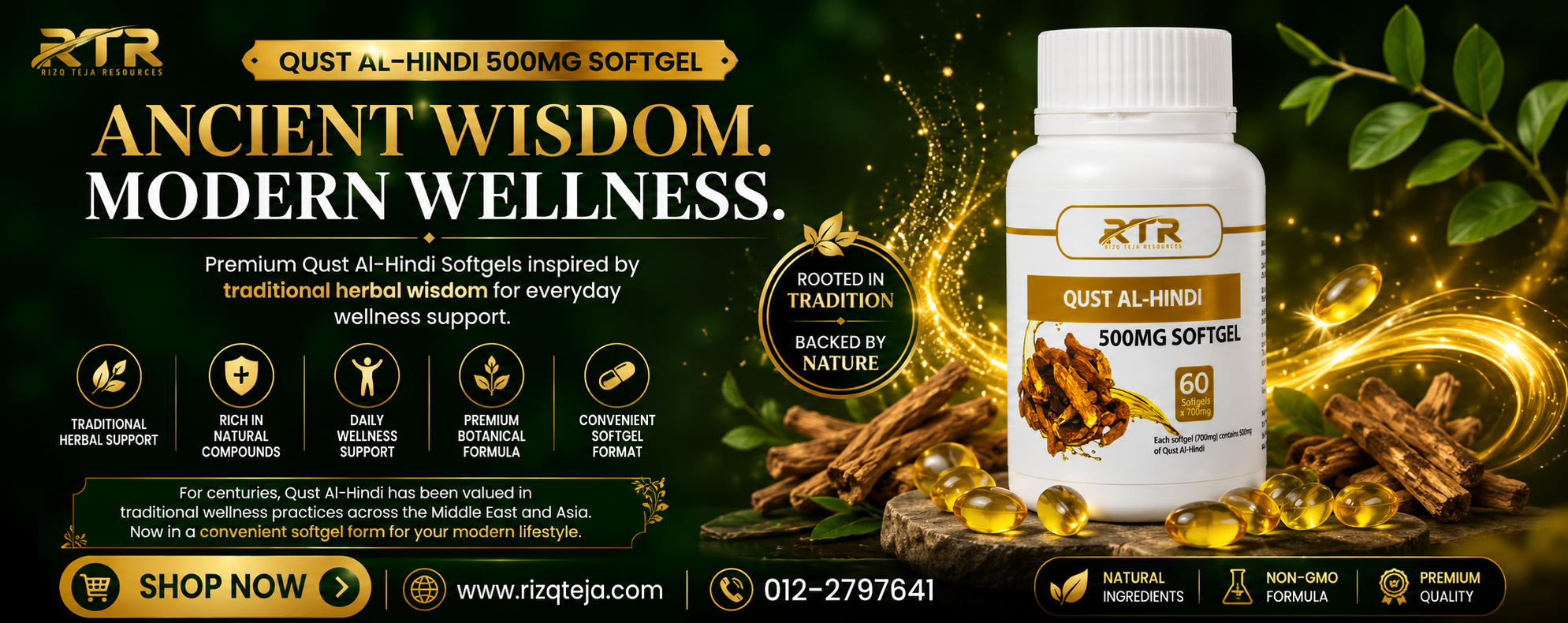
RTR® Qust Al-Hindi Softgel 🌿 Herb Mentioned in Hadith 🛡 Rich in Antioxidants 💪 Supports Daily Health 🌱 Easy-to-Use Softgel Formula ✨ Islamic Medicine Inspiration, Supported by Modern Research